
Bookmark and Share

Napier History

Napier, the capital of the Hawke's Bay province, was first sighted by Europeans (Captain Cook) in October 1769, when he sailed down the east coast of the North Island. He referred to the future site of Napier and its inner harbour as follows: "On each side of this bluff head is a low, narrow sand or stone beach, between these beaches and the mainland is a pretty large lake of salt water I suppose."

Traders, whalers and missionaries were the forerunners of permanent residency here. In the 1850s farmers and hotel keepers arrived. The Crown purchased the Ahuriri block (including the site of Napier) in 1851.

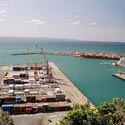
In 1854 a plan was prepared and the town named Napier, after Sir Charles Napier, the hero of the Battle of Meeanee.  The town became a borough in 1874.  Development was generally confined to the hill and to the port area of Ahuriri.  Napier soon flourished though, and became a well established commercial centre with a growing port, servicing a wide area.

On Tuesday 3 February 1931 Napier suffered a disastrous earthquake which rocked the town almost totally levelling all buildings in the inner city.  From the tragedy of the earthquake and its resulting death and destruction, Napier was presented with a unique opportunity - to plan the rebirth of its entire city centre.  In the two years following the quake, the city was completely rebuilt, thus making Napier unique with its Art Deco, Spanish Mission and unique Maori Art forms. Napier represents the most complete and significant group of Art Deco buildings in the world, recognised as the "Art Deco Capital of the world".

Today  the mixture of these "re-birthed" buildings, early colonial houses and modern houses give Napier a special charm, along with an intriguing and beautiful town centre like no other in the country.

privacy policy | terms and conditions | website design & build // techno joy